
VAQTGA BOG‘LIQ BO‘LMAGAN YULDUZ GRAFIKLARINING YECHIMI
Annotatsiya
Nonlinearity introduced in such materials would allow to control the frequency domain with the left-handed properties through strong modification of the effective nonlinear magnetic response. In particular, both dielectric permittivity and magnetic permeability of the composite material consisting of a mesh of wires and split-ring resonators embedded into a nonlinear dielectric can be controlled by varying the electromagnetic field intensity in such a way that it may allow switching the material properties
Kalit so'z
direct relevance, nonlinearity, magnetic dipole
SOLUTION OF THE TIME-INDEPENDENT STAR GRAPHS
S.M. Usanova, G.M. Usanovab
a Yeoju Technical Institute in Tashkent, 156 Usman Nasyr Str., 100121, Tashkent, Uzbekistan
b School 61, Ishtikhon district, Samarkand region. Zarband
Annatatsiya: Nonlinearity introduced in such materials would allow to control the frequency domain with the left-handed properties through strong modification of the effective nonlinear magnetic response. In particular, both dielectric permittivity and magnetic permeability of the composite material consisting of a mesh of wires and split-ring resonators embedded into a nonlinear dielectric can be controlled by varying the electromagnetic field intensity in such a way that it may allow switching the material properties between left- and right-handed.
Keywords: direct relevance, nonlinearity, magnetic dipole
Consider the following time-independent NLSE with repulsive nonlinearity
 (1)
given on the primary star graph presented in Fig. 1. The boundary conditions are given as ( is real;
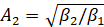 ,
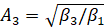 ,
 ):
 (2)
 (3)
 (4)
and the wave function is normalized as fallows:
 (5)
Dirichlet type boundary conditions are chosen in Eq. (2) due to their simplicity and their direct relevance to physical systems than other ones.
The solution of Eq.(1) can be written as
 (6)
where  is a real function obeying the equation
 (7)
The fallowing relations can be obtained from the boundary conditions given by Eq. (3)
 (8)
which lead to
 (9)
It is clear that the function  should obey Eqs. (2)-(5).
Exact solutions of Eq. (7) for finite interval and periodic boundary conditions can be found in Refs. [4,5]. Here we consider this this problem for the graph boundary conditions given by Eq. (2).
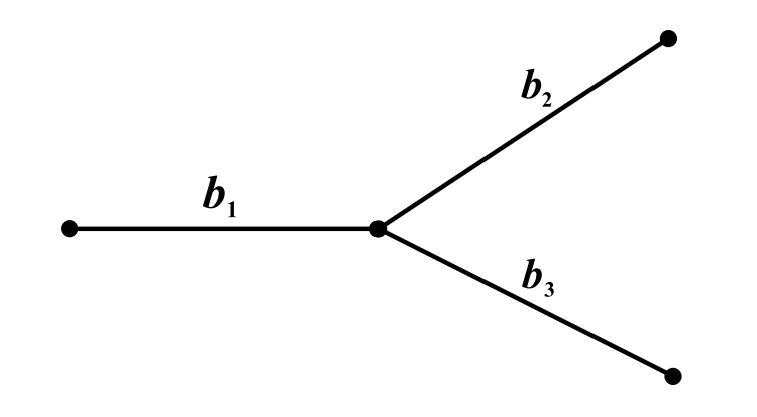
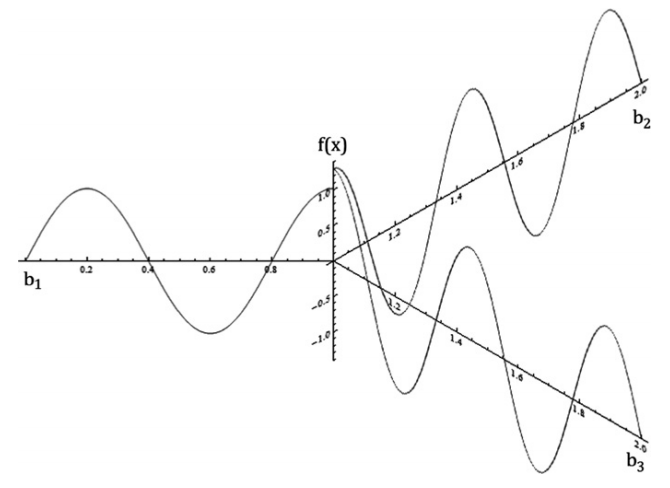
Figure 1: Primary star graph consisting of three bonds.
Solution of Eq. (7) satisfying these boundary conditionscan be written as

 (10)
where  are the Jacobian elliptic functions.
Inserting the last equation into Eq. (7) and comparing the coefficiets of similar termswe have
 (11)
where 
References
- A.Sihvola (2007), Metamaterials in electromagnetics, Metamaterials1, 2-11.
- Aos Al-waidh (2009), metamaterials, General Engineering Research Institute, John Moores University
- B .Monk (2000),Metamaterials-Critique and Alternatives, A John willey sons, INC publications, Merits.
- D. Schurig, J. J. Mock, B. J. Justice, S. A. Cummer, J. B. Pendry, A. F. Starr, and D. R. Smith,(2006) “Metamaterial Electromagnetic Cloak at Microwave Frequencies,” Science, vol 314,. no. 5801, pp.977 – 980.
- Enghetaand Ziolkowski, R. W., (eds.) (2006), ElectromagneticMetamaterials: Physics and Engineering Exploration, Willey-IEEE PRESS, NewJersy, U.S.A
Fikrlar