OPTICAL SECOND HARMONIC GENERATION IN WAVEGUIDES CUTOFF RULES
Sulton Usanov
Kimyo International University in Tashkent, 156 Usman Nasyr Str., 100121, Tashkent, Uzbekistan
Annatatsiya: Optical solitons in quadratic nonlinear media have attracted growing attention, because of their potential applications to the manipulation of light signals in different scenarios. Such solitons exist in a wide variety of material and input light conditions in both bulk crystals and planar waveguides, and recently spatial solitons consisting of two strongly coupled optical fields have been observed experimentally in second-harmonic generation SHG. Another recent contribution to this rapidly developing field is the demonstration of the spatial modulational instability of wide elliptical beams and multisoliton generation in quadratic nonlinear media.
Keywords: quadratic nonlinear, dielectric
In this Rapid Communication we investigate the formation of spatial walking solitons under conditions for type II SHG; therefore, the solitons exist due to the mutual trapping of an ordinary polarized fundamental frequency (FF) beam, an extraordinary polarized FF beam, and the extraordinary polarized second harmonic (SH) beam. Such solitons constitute a three-parameter family and they exist for different total energy, for different unbalancing energy between the two fundamental beams, and for different soliton velocities. We study the amplitude and phase-front shapes of the solitons, derive the cutoff conditions for the families of solutions, give the stability criterion for the three-parameter family of solitons, and verify numerically its predictions.
This plays important role for optical materials design, laser generation, signal transfer and many others. Therefore for practically important purposes it is required to develop novel functional materials and structures for optical harmonic generation, especially ways for its tuning.
 (1)
 (2)
 (3)
 (4)
where the overdots indicate the derivative with respect to  .
For the fundamental beam, setting  and linearizing Eqs. (1) and (2) give:
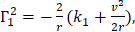 (5)
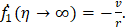 (6)
In general, the tails of the second-harmonic beam are more complicated because the nonlinear terms in Eqs. (3) and (4) may decay at  with the same rate as the linear terms. When such is not the case, one has
 , with
 . Then, Eqs. (3) and (4) yield
 (7)
 (8)
For the condition  to be fulfilled by Eq.(7) it is necessary that
 (9)
In the case  and
 that we always consider in the numerics here, inequality (19) leads to
 (10)
For given values of the various involved parameters, stationary walking solitons exist for nonlinear wave-number shifts above cutoff values:
 (11)
References
[1] D. Mihalache et al, Phys. Rev. E 56, R6294(R), 1997
[2] E. Ibragimov, A. Struthers, OPTICS LETTERS Vol. 21, No. 19, 1996
[3] L. Toner et al, J. Opt. Soc. Am. B/Vol. 15, May, 1998
[4] DaviBibianoBrito (2010), Metamaterial inspired improved antenna and circuits, UFRN, pp.19-27.
[5] GoranKiti, Vasa Radoni, and VesnaCrnojevi –Bengin(2012), Soil moisture sensors based on metamaterials, SIST.
[6] J. B. Pendry, A. J. Holden, D. J. Robbins, and W. J. Stewart,(1999) Magnetism from conductors and enhanced nonlinear phenomena, IEEE Transactions Microwave Theory and Techniques, vol. 47, no. 11, pp. 2075-208.
[7] M. A. Antoniades, and G. V. Eleftheriades, (2003)“Compact Linear Lead/Lag Metamaterial Phase Shifters for road band Applications,” IEEE Antennas And Wireless Propagation Letters, vol. 2, pp. 103-106.

Fikrlar