
Dispersion models of natural materials
Abstract
In this report, we want to drawn an introduction to metamaterials. With the terms metamaterials, we intend an engineered material, with electromagnetic characteristics beyond to that of the natural materials. In order to understand the metamaterials and their behavior, we start with a brief description of the most common modesl for the permittivity and the permeability of the natural materials.
Keywords
polarization vector, magnetization vector, model
Dispersion models of natural materials
S.M. Usanova, Sh.M. Usanovb
a Yeoju Technical Institute in Tashkent, 156 Usman Nasyr Str., 100121, Tashkent, Uzbekistan
b Tashkent Institute of Irrigation and Agricultural Mechanization Enginees, National Research University, 39 Kori Niyazov Str., Tashkent, Uzbekistan
Annatatsiya: In this report, we want to drawn an introduction to metamaterials. With the terms metamaterials, we intend an engineered material, with electromagnetic characteristics beyond to that of the natural materials. In order to understand the metamaterials and their behavior, we start with a brief description of the most common modesl for the permittivity and the permeability of the natural materials.
Keywords: polarization vector, magnetization vector, model
As it is well known, when the electromagnetic radiation interacts with a material, can be defined a polarization vector, P, for the electric interaction, and a magnetization vector, M, for the magnetic interaction. The permittivity and the permeability of a linear medium can be defined as follows:
 (1)
 (2)
where  and
 are the electric and magnetic susceptibility, respectively. Therefore, to define the permittivity or the permeability of a medium, we have to find the linear relation between the electric field and the polarization, or the magnetic field and the magnetization, respectively.
There are many mathematical model to describe the dispersion of natural media. Here, we briefly discuss the following models:




The Lorentz model describes a non polar dielectric, i.e., a dielectric in which the molecules have not its own electric dipole. In this media the polarization is due to the deformation of the atoms. When an external electric field  is imposed, the positive and negative charges of each atom move away from each other and each atom gains its own electric dipole moment
 , where e is the elementary charge, and
 is the oriented distance between the positive and negative charges. The forces involved in this process are: the external force
 , the elastic force of the atom that tends to bring the charge in their original positions,
 , with k the equivalent elastic coefficient of the atom, and the frictional forces that hinder the motion of the charges,
 , whit
 the velocity of the charges and
 the viscous frictional coefficient. By applying the Newton’s law, we can describe the Lorentz model with the following differential equation:
 (3)
Reminding that the polarization is  , we can multiply each side of the equation to Ne, obtaining:
The third quadrant ( ,
 ) represents Metamaterial, also called left handed material or double negative material(DNG).It follows the left handed rule because propagation of wave takes place in backward direction in this medium. Due to negative
 and negative
 the refractive index of the medium is calculated to be negative .Thus also termed as NIM (negative index material). Electric vector E, electromagnetic vector H and wave vector k forms the left hand triplet as shown in fig. By using the property of third quadrant, the first left handed test.
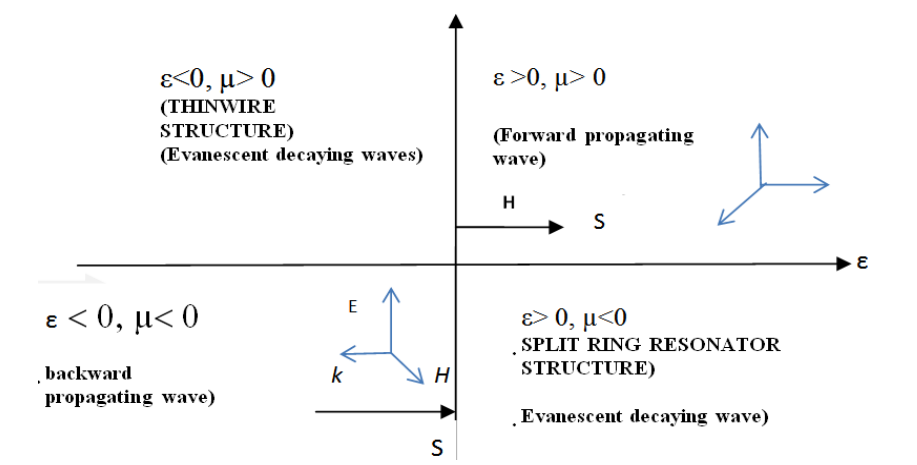
Figure 1: Real and imaginary parts of the Lorentz’s permittivity.
Classification of material on the basis of µ and ɛ.
 (4)
The solution of this equation in the frequency domain gives the value of the electric susceptibility:
 (5)
Structure was used which was the combination of material with negative permittivity (thin wire) and negative permeability (SRR)
Effect on Snell’s law:
In the third quadrant Refractive index in the Snell’s law is negative. N. Engheta (2006) described that an incident wave faces negative refraction at the interface Ray bends in inside direction after refracting in to medium which is contrary to positive index medium as shown in fig. Light is refracted in a contrary way as compared to the normal “right handed material”.
where  and
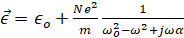
 . From this expression the permittivity of the dielectric can be easily computed:
 (6)
In Figure 2, there are the qualitative behavior of the real and imaginary parts of this permittivity. As can be see, the imaginary part have the peculiar bell shape, with a peaked maximum in correspondence of the resonance frequency. On the other hand, the real part grows up to a maximum value in a neighborhood of the resonance frequency and after that it suddenly decreases to a minimum value and from it start to increase again and tends asymptotically to the permittivity of a vacuum. We want to remind that in the intervals where the permittivity is growing the frequency behavior is called normal dispersion, and in the intervals where the permittivity decreases are called of anomalous dispersion. In the case of negligible losses, it can be shown that the maximum tends to plus infinity and the minimum to minus infinity and the dispersion becomes normal at all frequencies.
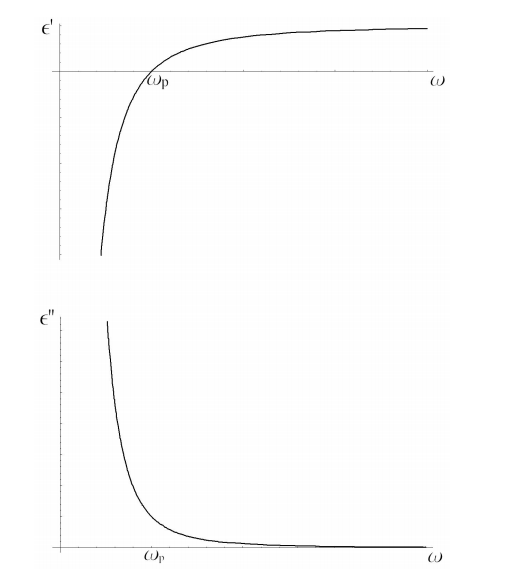
Figure 2: Real and imaginary parts of the Drude’s permittivity.
References
- Adnan Noor (2010), Metamaterial Electromagnetic Absorbers and Plasmonic Structures, pp.42-43.
- A.Sihvola (2007), Metamaterials in electromagnetics, Metamaterials1, 2-11.
- Aos Al-waidh (2009), metamaterials, General Engineering Research Institute, John Moores University
- B .Monk (2000),Metamaterials-Critique and Alternatives, A John willey sons, INC publications, Merits.
Comments