
STUDY OF PHYSICAL-CHEMICAL PROPERTIES AND SOME PROPERTIES OF PAVLONIA WOOD
Abstract
In this research work, we studied the characteristics of the Pavlova tree: roots, growth rate, reproduction, fruits, weight, strength, stability and quality indicators. Paulownia wood was first crushed to a thickness of 0.5-1.0 cm, then treated in 2.5-5.5% NaOH alkali at a temperature of 1700C for 6 hours. Cellulose productivity, brightness level, moisture content, lignin content, ash content, viscosity, α-cellulose and polymerization levels of processed cellulose were determined. The study should also note fundamental research into cellulose quality indicators, mechanical and physico-chemical indicators of this material, obtained under optimal conditions. Scientific data on the possibility of producing various paper products, as well as high-quality cellulose ethers and ethers from paulownia tree cellulose are analyzed.
Keywords
Properties of paulownia wood, microscopic structure, wood fiber cells, cellulose, quality indicators.
Author
Tursunov J.T., Sayfutdinov R.S., Mukhitdinov U.D.
STUDY OF PHYSICAL-CHEMICAL PROPERTIES AND SOME PROPERTIES OF PAVLONIA WOOD
Tursunov J.T., Sayfutdinov R.S., Mukhitdinov U.D.
muxitdinovu@mail.ru
Tashkent chemical-technological institute
In our republic, the demand for cellulose, paper and products developed based on them is very high, and the scientific and research activities conducted in this direction are considered to be of primary importance. It would be appropriate if the pavlovian tree, which has been grown in our country since the middle of the century, is used wisely as a raw material in the pulp and paper industry.
Our current research is focused on the application of pulp from pavlovian wood to various industries, with great attention being paid to studying the properties of the resulting cellulose [1-3].
The results of the conducted research show that the quality of cellulose obtained from pavlovnia trees is higher than cellulose obtained from other sources. Besides, it is known that this plant is used in pharmacology, cosmetology and animal husbandry, in addition to cellulose extraction from pavlovnia trees. In another effort, our government is implementing various measures to support the cultivation of pavlovnia trees, including allocating land for plantations and leasing land to farmers and businesses for timber production. Also, the cultivation of pavlovian trees is a useful resource and efforts are underway to optimize cultivation through new innovative agro-technologies for their propagation [4-6].
Pavlovnia tree is a fast-growing tree with large leaves, about 70 cm in diameter and flowers up to 6 cm in diameter, with a beautiful crown. The diameter of the tree is up to 1 meter. The average lifespan is up to 100 years. Depending on the growing environment, trees can reach a maximum of 25 meters and different heights.
Root system: superficial, long-rooted, without a distinct central root.
Undemanding to soil, it will grow in any dry soil with up to 2% lime, but it thrives best in deep, moderately moist, drained, fertile moist soil. Does not like drought and swamp.
Light tolerance: prefers sunny, open, well-lit places.
Frost resistance: very cold resistant, can withstand temperatures as low as -28°C, and the buds freeze. It is sensitive to cold when it is young. It should be planted in places protected from winter winds.
Growth rate: grows very quickly, but slows down significantly in infertile soils. At 10 - 11 years old, depending on the species, it can reach 20 - 25 m.
Propagation: propagated by seeds and rhizomes.
Fruit: Contains many seeds. It ripens in September-October. The seeds remain on the tree during the winter season and bear fruit at 5-6 years of age. One tree can produce up to 20 million seeds per year.
Weight: the average weight of a pavlovian tree is 208-282 kg per 1 cubic meter. Paulownia wood is almost four times lighter than oak at 850 kg per 1 cubic meter and half of pine wood at 482 kg per 1 cubic meter.
Strength: Pavlovnia has the highest strength-to-weight ratio of any tree species. Paulownia wood is resistant to load and deformation due to moisture.
Stability: Pavlovnia wood takes at least 30 days to dry in the open air. The wood can be dried for 24 hours at high temperature in drying ovens until the moisture content in the wood reaches 10-12%. The relative shrinkage of raw wood during drying is 2.2% and 4% in length [7-10].
The trunk and flowering parts of the pavlovnia tree:
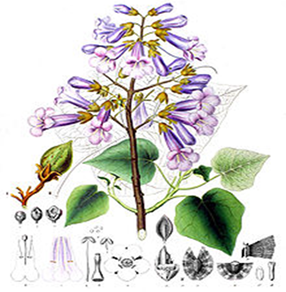 | 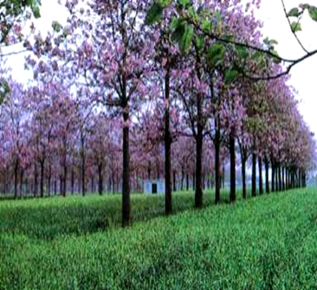 | 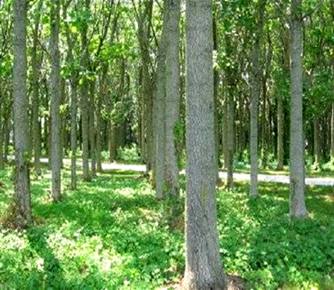 |
Figure 1. 3 and 5-year plantation of paulownia tree.
Macroscopic structure of the pavlovnia tree: the bark is gray-brown, rather smooth, without cracks. The color of the wood is grayish yellow. The wood is straight-grained, straight fibers and texture with bright and expressive beautiful patterns of grains, shiny, light, odorless. The smoothness of the wood and the absence of knots indicate the quality of the wood material.
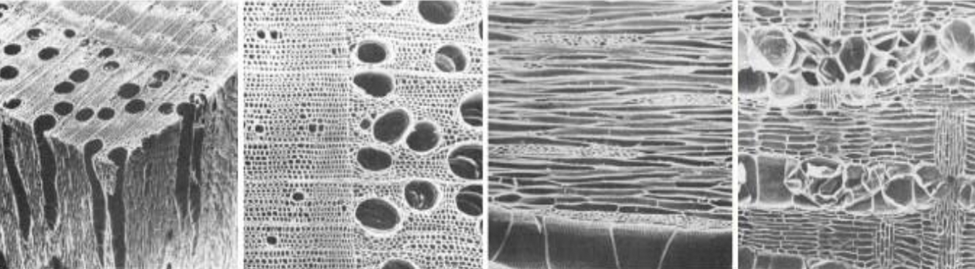
Microscopic structure:
1. Fibers: in cross-sectional holes, round or elliptical. The difference in fiber sizes and three to five perforations between early and late wood; with a maximum deviation of about ten times. The fibers are mostly single, sometimes circular, and the outer layer is smaller in size.
2. Nuclear rays are mostly homogeneous, sometimes heterogeneous, a few are spindle-shaped.
3. Parenchyma cells are well developed, there are tracheids, which are not found in all wood, hardwoods, for example, in oak, in the late layering zone throughout the year.
4. Wood fiber cells are present in growth rings at an early stage of development. Wood fibers are arranged in vertical rows, the cell wall is less than 3 microns thick, and the average length is 550-1700 microns.
1 2 3 4
Figure 2. Microscopic structure of paulownia wood.
Due to its fast growth and large leaves, the Pavlovnia tree absorbs a lot of CO2 carbon dioxide and releases a lot of oxygen.
In the results of our study, the average value of the length of the fibers is 0.905 mm, the average fiber width is 34.59 mkm, the average thickness is 26.80 mkm, and the cell wall thickness is 3.89 mkm.
The elasticity coefficient of pavlovnian fibers is included in the group of elastic fibers. The elasticity coefficient of pavlovnia fibers is 75.96%.
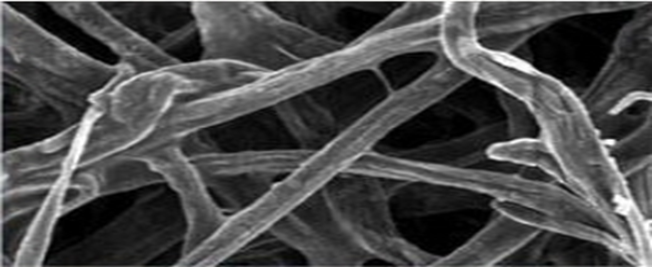
Figure 3. Microscopic structure of pavlovnia tree.
Cross section of paulownia under microscopic magnification:
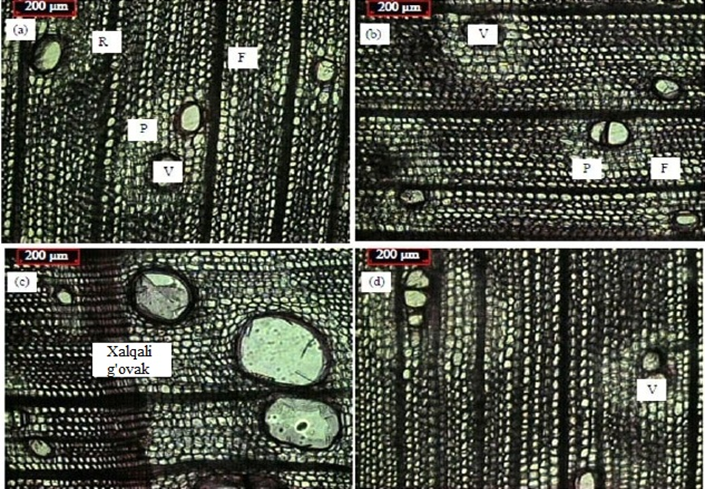
Figure 4. (a and b) - small pores, (c) - compression of fibers, (d) - several large pores,
F: proteins, P: parenchyma, R: rays, V: vessels.
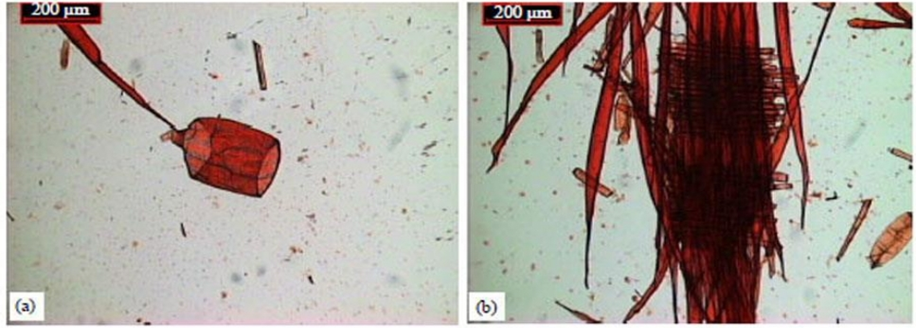
Figure 5. (a) – vessel sample maceration, (b) – radial section, F: fibers, R: rays.
Pavlovnia wood fibers are not as dense as other dense woods. As you can see from the picture above, the fiber morphology of pavlovian wood is good. Paper is a good raw material for manufacturing products. A 3-year-old pavlovnia tree with a girth of 50-60 cm and a height of 12-15 m replaces a 35-40-year-old pine [7,9].
Currently, in countries with developed cellulose industry, various researches are being conducted to reduce the participation of factors that cause various destructive conditions in the process of extracting cellulose from various plants containing natural polymers. Because the quality indicators of the obtained cellulose are required to be at a level that allows for its wide use in the future. Taking into account the above points, some simplifications were made in the process of obtaining cellulose from the perennial plant pavlovnia tree. The plant stem was first cut into small pieces and chemically processed in a special laboratory [2,4].
Methodical part. Propagation of the Pavlovnia plant is underway, it is a fast-growing tree that is used as a building material. Separate parts (body, branches, roots, bark) of pavlovnia plant were studied in order to determine suitability for chemical processing.
The results of the analysis of the components of pavlovnia (table 1) show that the most valued component of wood – cellulose is present in the largest amount in the trunk of the tree and is 45.5%, while the least amount of cellulose is present in the bark (24.5%).
Table 1
The amount of cellulose and other components in the components of pavlovnia
№ | Components | Body | Horns | Roots | Bark |
1 | Cellulose, % | 45,5 | 37,2 | 39,1 | 24,5 |
2 | Lignin, % | 21,8 | 18,7 | 19,2 | 17,1 |
3 | Ash content,% | 1,71 | 1,53 | 1,71 | 4,6 |
4 | Moisture,% | 18,3 | 18.5 | 18,2 | 17,5 |
5 | Extractable substances,% | 3,21 | 4,1 | 5,6 | 4,7 |
Table 1 shows that the branches and roots of pavlovnia can serve as raw materials for chemical processing as secondary raw materials, since they contain up to 37.2 and 39.1 %, respectively, that is, only 6-8% less cellulose than the body. will be available. Lignin, the second chemical component of pavlovnia, increases with decreasing cellulose content. 21.8, 18.7, 19.2 and 17.1% of lignin were found in the trunk, branches, roots and bark, respectively. It is desirable to use pavlovian bark, which has the least amount of lignin, to obtain fibrous semi-products. The remaining components are valuable secondary resources for chemical processing to extract cellulose.
The scheme of obtaining cellulose from the pavlovnia tree is as follows: extraction from the tree bark, crushing of the pulp from the bark, first hydrolysis, and then treatment with alkali to obtain cellulose. In order for the chemical treatment to be effective, the pavlovian fiber is cut and ground in 0.5-1 cm size. Then 100 g is taken out, put in a flask and 500 ml of water is poured into it. The mixture is boiled for 4 hours, extracted and filtered to separate the pulp. After the mass is separated from the liquid, it is hydrolyzed in a 3% nitric acid solution for 60 minutes, then it is washed to pH 6.5...8.5 and boiled with 5% sodium alkali to separate the pulp from lignin, polysaccharides and fatty substances. After washing the obtained cellulose to pH 9...9.5, it is bleached with hydrogen peroxide solution. Then the mass is washed and bleached cellulose is dried in a drying cabinet. In order to determine the optimal conditions for the extraction of cellulose from pavlovnia fiber, it was cooked in 5% alkali for different times (table 2).
Table 2
Effect of pavlovnia cooking time on cellulose content
Time, hours | Cellulose, % | Lignin, % | Polysaccharides, % | Ash content, % | Tar and oils, % | Water soluble substances, % |
2 | 39,5 | 23,8 | 23,5 | 1.94 | 3,6 | 8,5 |
3 | 43.1 | 22,4 | 22,3 | 1.82 | 2,8 | 7,9 |
4 | 44.2 | 21,5 | 21,7 | 1.70 | 2,5 | 7,4 |
5 | 47.4 | 20,8 | 20,6 | 1.63 | 2,3 | 7,2 |
According to the results of the experiments presented in table 2, the most favorable conditions for cooking pavlovian dough are as follows:
1. Extraction in water - boiling for 60 minutes.
2. Hydrolysis in 3% nitric acid - 2 hours, temperature - 110oC.
3. Boiling in 5% alkali at 110oC for 3 hours to remove impurities from cellulose.
In the experiment according to Table 2, the productivity of cellulose is 39.5-47.4%, the amount of lignin is 23.8-20.8%, the amount of polysaccharides is 23.5-20.6%, the amount of ash is 1.94-1.63%, the amount of tar and oil is 3.6-2.3%, and water-soluble substances are 8.5 - made up 7.2%. In order to determine the optimal conditions for the extraction of cellulose from pavlovnia fiber, it is cooked in different concentrations of alkali for 6 hours (table 3).
Table 3
Quality parameters of cellulose obtained from 3- and 5-year old pavlovian trees
№ |
NaOH, % | Boiling τ, hours | Temperature, 0C | Quality indicators of cellulose | |||||||
Cellulose product, % | Whiteness level, % | Humidity, % | Lignin, % | Ash content, % | Viscosity, cPs | α – cellulose, % |
*DP | ||||
3 years old | |||||||||||
1 | 2.5 | 6 | 170 | 37,8 | 61,3 | 3.2 | 23,9 | 4.83 | 7,1 | 61.5 | 351 |
2 | 3.5 | 6 | 170 | 40.1 | 71,5 | 3.6 | 27,5 | 3.65 | 9,3 | 68.3 | 376 |
3 | 5.0 | 6 | 170 | 43.6 | 87,2 | 3.5 | 29,1 | 3.51 | 11,6 | 70,1 | 410 |
4 | 5.5 | 6 | 170 | 45.3 | 91,4 | 3.3 | 30,2 | 3.32 | 12,4 | 74.6 | 451 |
5 years old | |||||||||||
1 | 2.5 | 6 | 170 | 39,5 | 65,7 | 3.4 | 21,8 | 3.92 | 19,4 | 73.2 | 1105 |
2 | 3.5 | 6 | 170 | 42.4 | 76,4 | 3.6 | 22,1 | 2.75 | 21,5 | 85.4 | 1069 |
3 | 5.0 | 6 | 170 | 46.1 | 89,6 | 3.7 | 20,7 | 2.51 | 23,2 | 87.1 | 1025 |
4 | 5.5 | 6 | 170 | 48.3 | 93,1 | 3.5 | 23,2 | 2.27 | 24,1 | 88.5 | 957 |
Comments